Book Review: This Time Will Be Different

Too many subplots and the protagonist’s lack of personal development kept this book from reaching its potential.

This Time Will Be Different by Misa Sugiura

Another book from one of those blissful trips to Barnes & Noble where my grandmother and great aunt spoil me even though I’m way too old for that.

Cover Description

“Katsuyamas never quit, but seventeen-year-old CJ doesn’t even know how to get started. She’s never lived up to her mom’s type A ambition, and she’s perfectly happy just helping her aunt, Hannah, at their family’s flower shop...She’s finally found something she might be good at.

Until her mom announces she’s planning to sell the shop—to the McAllisters, the same people who swindled CJ’s family, and many others, out of their property when Japanese Americans were sent to internment camps during World War II. Suddenly a rift threatens to splinter CJ’s family, her friends, and their entire Northern California community. And for the first time, CJ is finding the strength to step up and fight.”

Note

This book tackles the relevant and politically sensitive issue of redressing historical wrongs. Do not confuse my review of this book with my view on the issue. To be honest, I’m not sure how I feel about this book. To reflect my mixed feelings, I will structure this review differently from my previous reviews.

Characters

Things I liked

  • CJ is not a violin-playing math prodigy like 99% of other Asians depicted in books/movies/TV shows. I appreciate the author’s combating the model minority stereotype.
  • The beautiful popular people are decent human beings. The book does not fall into the Mean Girls trap of making villains of the social elite. They make hurtful mistakes, yes, but they are well-rounded characters whose motivations, however misguided, are understandable. I also love the author’s use of the hashtag #winning to describe them.
  • CJ’s family members all react to the situation differently. I love how even though each family member has strong opinions, they still love and support each other.
  • Owen. I can’t help falling for the nerdy history buff.

Things I didn’t like

  • CJ’s growth arc is both erratic and flat. CJ tackles so many internal personal issues it’s exhausting even to list them—letting go of her bitterness toward the #winners, navigating relationships with guys, smoothing the friction in her mother-daughter relationship, discovering her own passions, developing her identity as a Japanese American, and deciding how her family history affects her present. Each issue could be a book by itself. By cramming all of them into one story, the author ensures CJ makes minimal progress in any of them.
  • Lack of long-lasting transformation. CJ went from unenthused and mediocre to passionate and motivated to disillusioned and directionless. Even that arc was lost in the mix of all the other issues pushed in the plot. At the end, she still doesn’t know what she wants to do with her life.
  • CJ comes off as a passive character. Many of her actions/reactions are downright petty. Yes, she is like many teens in that she is caught in a whirlwind of confusion, but by the end of the book, she should have grown more in at least one area.

Plot

Things I liked

  • Focus on the protagonist. Even while addressing a wider issue that applies to many people groups across the country, the author maintained the focus on CJ’s family and their diverse reactions.
  • Finding Similarities. I liked how the author explained the concept of “white savior” by comparing racism to homophobia and by providing the example of a straight ally monopolizing a Pride rally. In that context, it was a great example.
  • SPOILER ALERT: I like who CJ ends up dating.

Things I didn’t like

  • Too many subplots. As I mentioned above, too many things happen at once to develop all of them.
  • Emphasis on CJ’s previous sexual exploits. While the subplot provided minor additional characterization of the mother-daughter relationship, it had minimal impact on the overall plot and was mostly an afterthought.
  • Suguira tried to advocate for too many things at once. Life is complicated, and I agree that different issues intermingle, but this book had so many hot button political feuds raging at once, none of them had any power. Suguira wasn’t telling a story; she was preaching. The book read more like a bunch of shallow slogans marching by at a political protest than a heartfelt conversation about issues that affect real people. I couldn’t care about the issues because I wasn’t given time to process how they affected the characters. I couldn’t care about the characters because the author bogged down the story with messaging rather than developing them into relatable people.
  • Lack of closure. The book focused on CJ’s personal development, so I liked that the author left some loose ends with the larger issues. However, the lack of transformation in CJ meant the ending fell flat. Had CJ developed a defined sense of who she was and what she wanted, the last chapter would have satisfied readers. As written, it lacks closure.

Writing Style

The author’s witty and ironic voice fits with her protagonist and speaks well to modern teens. Her use of hashtags throughout the prose added a touch of pop culture relevance.

Other

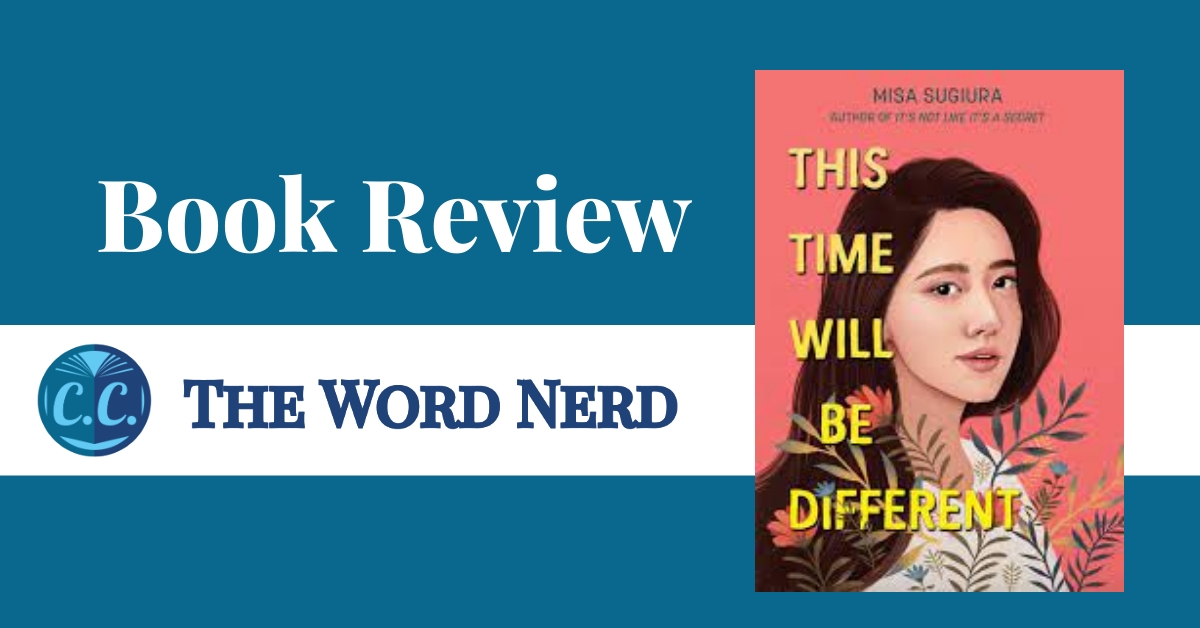
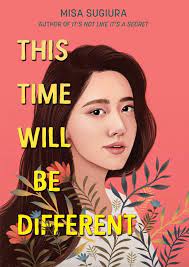
The cover. The cover is the reason I bought the book. My grandmother is a gardener, so flowers immediately catch my attention. The cover communicated the genre well and included a nod to the “flower magic” in the book. I love learning about flower symbolism and had already been researching it before I bought this book. The author includes a list at the end to help readers keep track.

The history. I love history, and I would have liked for this story to be told with parallel timelines, bouncing back and forth between CJ’s grandfather’s experience and her own. This would have provided unfamiliar readers with the historical context. Experiencing the oppression through CJ’s grandfather’s tale would allow readers to better relate to CJ’s anger.

Conclusion

This book tried to do for Japanese Americans what The Hate You Give did for Black Americans, but too many subplots and CJ’s lack of personal development led to it falling far short of the mark. While I liked many aspects of this book, I’d recommend others first.


Want more book reviews? Click HERE to subscribe!


If you want to read and form your own conclusions, you can purchase the book from Amazon buy clicking the image below*

Similar books I would recommend instead

Read My Review

Read My Review

Read My Review


*The above links are Amazon Affiliate links, meaning I earn a small commission if you purchase through them.
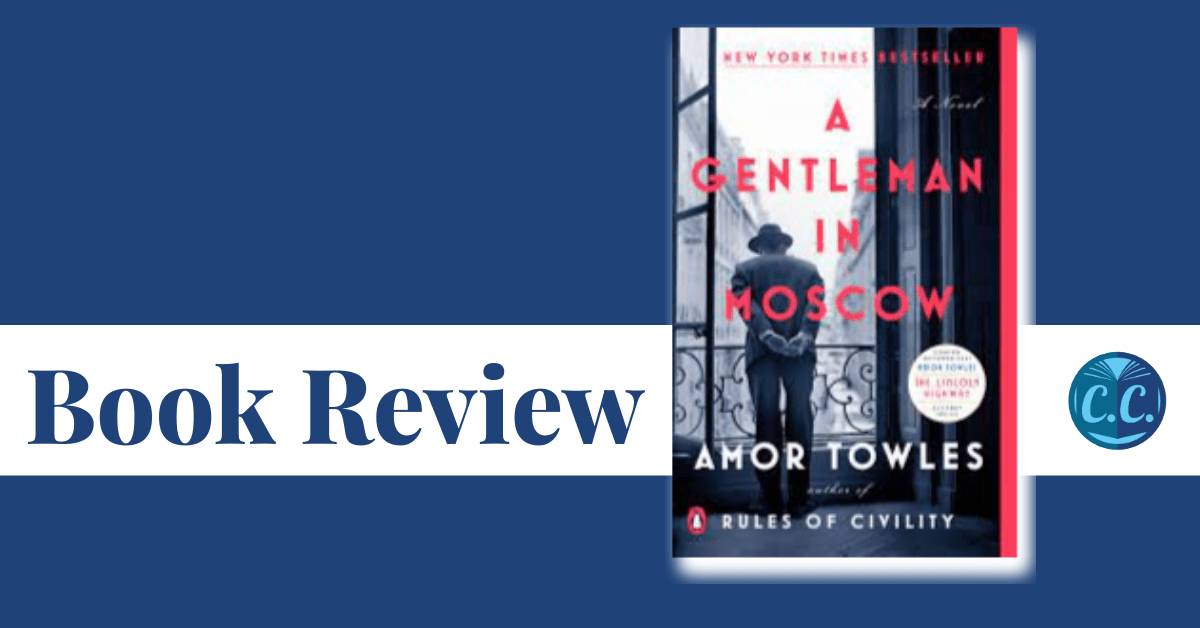
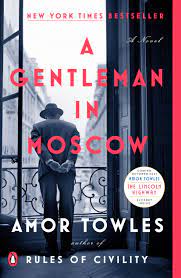
Book Review: A Gentleman in Moscow

This was a book club pick, and as I hadn’t finished the last four books we read (oops), I was determined to finish this one.

A Gentleman in Moscow by Amor Towles

This was a book club pick, and as I hadn’t finished the last four books we read (oops), I was determined to finish this one.

Description (from Amazon)

“In 1922, Count Alexander Rostov is deemed an unrepentant aristocrat by a Bolshevik tribunal, and is sentenced to house arrest in the Metropol, a grand hotel across the street from the Kremlin. Rostov, an indomitable man of erudition and wit, has never worked a day in his life, and must now live in an attic room while some of the most tumultuous decades in Russian history are unfolding outside the hotel’s doors. Unexpectedly, his reduced circumstances provide him entry into a much larger world of emotional discovery.”

Character

The Count, as he’s often referred to, is the kind of man everyone wants to befriend, but nobody would want to parent. One can tell that his youth was filled with mischief, and not even gray hair and joints that no longer like the Metropol stairs can dampen that spirit. What I liked most about him was that, though formerly an aristocrat, he treats everyone the same—from the barber to the seamstress to the hotel’s waiters, whose ranks he eventually joins. Seeing the Count adapt to his ever-changing circumstances was inspiring.

Plot

The plot meanders through many seemingly pointless side trips as the tumultuous events in the outside world impact the microcosm of the hotel. Eventually, the author tied these things together, giving them purpose within the broader storyline, but it demanded patience from the reader. I must confess that I almost didn’t finish. The plot is not well suited for the modern attention span, and the points it made were too subtle for a distracted reader.

Writing Style

The author’s writing style is really the only reason I kept reading. His prose is gorgeous, with creative descriptions that bring the story to life. The reader truly gets a feel for life in the Metropol.

Miscellaneous

Another strength of this book was the myriad of philosophical reflections sprinkled throughout the story. However, I was often too bogged down by the seemingly pointless side stories to appreciate them. Many of the more dramatic implications of the oppressive Russian regime were so subtly depicted that I nearly missed them.

Conclusion

If I were a generation older, I think I may have enjoyed this book more. As is, the subtle philosophy and meandering plot are not well suited to readers accustomed to the instant gratification offered by modern technology. This book is beautifully written, and it tells an inspiring story of resilience and resistance. I really want to love this book, but the best I can say is that I don’t regret finishing it, even if it took a bout of insomnia binge-reading to do it.


Want more book reviews? Subscribe

Make your own conclusions*

A Gentleman in Moscow

SIMILAR BOOKS I ENJOYED

Read My Review

Read My Review

Read My Review


*The above links are Amazon Associate links, meaning that I earn a small commission if you purchase through them. All opinions are my own.

English in the Gutter

Profanity is an integral part of the human lexicon, processed in the part of the brain related to fleeing danger rather than processing speech. However, which words a culture considers profane and to what degree uttering them warrants a bar of soap in the mouth varies over time.

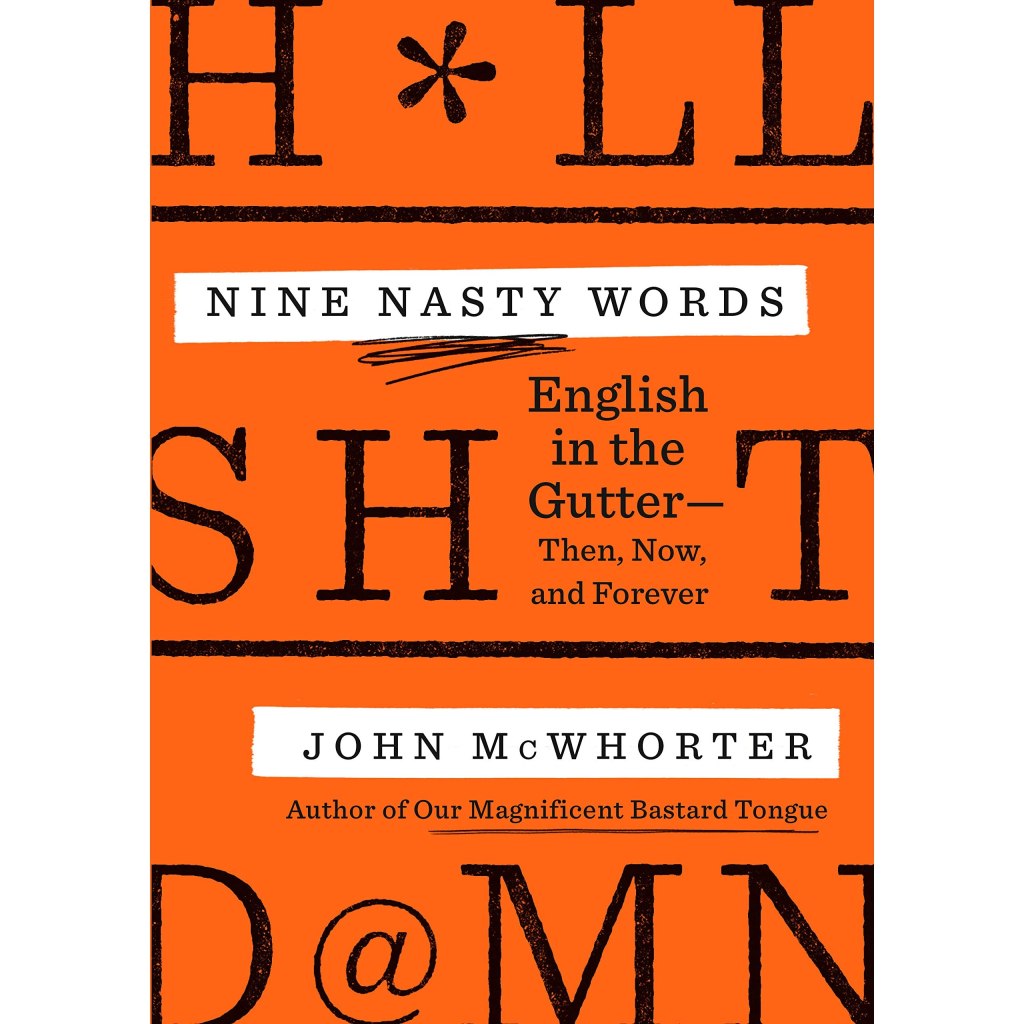
Book Review: Nine Nasty Words: English in the Gutter: Then, Now, and Forever

Though I don’t curse (often) myself, profanity fascinates the wannabe linguist in me. I’m also a fan of John McWhorter’s podcast, Lexicon Valley, so when I heard he was releasing this book, I was number one on the library’s waitlist.

Description:

For as long as mothers have existed, they have scolded their children for saying naughty words. Profanity is an integral part of the human lexicon, processed in the part of the brain related to fleeing danger rather than processing speech. However, which words a culture considers profane and to what degree uttering them warrants a bar of soap in the mouth varies over time.

In this pithy yet thorough account, John McWhorter delves into the historical, sociological, political, and linguistic development of today’s most prevalent curse words. With his genteel style and not a small amount of humor, he examines what gives curse words their power, and why we like them so much.

My Review

This book was everything I wanted and more. It details the cultural changes that caused profanity to shift from religious terms to bodily functions to identity slurs with many cogent examples. That my ancestors may have contributed the f-word to the English language makes me inexplicably giddy. That whole chapter had me laughing out loud, which was rather difficult to explain to my husband.

More than how we anglophones use these nine words today, McWhorter explains how the previously innocent words became nasty. Moreover, he describes how their meanings expanded, and how most of them now serve as pronouns. For grammar nerds feeling rebellious, I highly recommend this book. That said, I will caution that McWhorter types out all the words, and reading the stronger ones (e.g. the racial slur) repeatedly was a little uncomfortable, even for me. Readers with delicate sensibilities beware.

Writing Style

McWhorter’s writing style is as smooth and precise as one would expect from a professional linguist. His prose is as elegant as a fine wine. I am a huge fan of his writing, but if you have the chance, I recommend the audiobook as John McWhorter has a lovely voice. That is, assuming you don’t have small children at home.

Conclusion

Nine Nasty Words is not for the faint of heart, but for those with an interest in English’s saltier side, I highly recommend it. With humor and detail, McWhorter tells the story of sailor talk with the elegance and detail of a professor.


Want more book reviews? Click HERE to subscribe!


Click the Image to Purchase from Amazon*

Nine Nasty Words

You may also like:

Word by Word

One of my favorite books

Eats, Shoots & Leaves

For those who love carry a red pen everywhere

Dryer’s English

For the wannabe line editor


*The above links are Amazon Associate links, meaning I earn a small commission if you purchase through them.